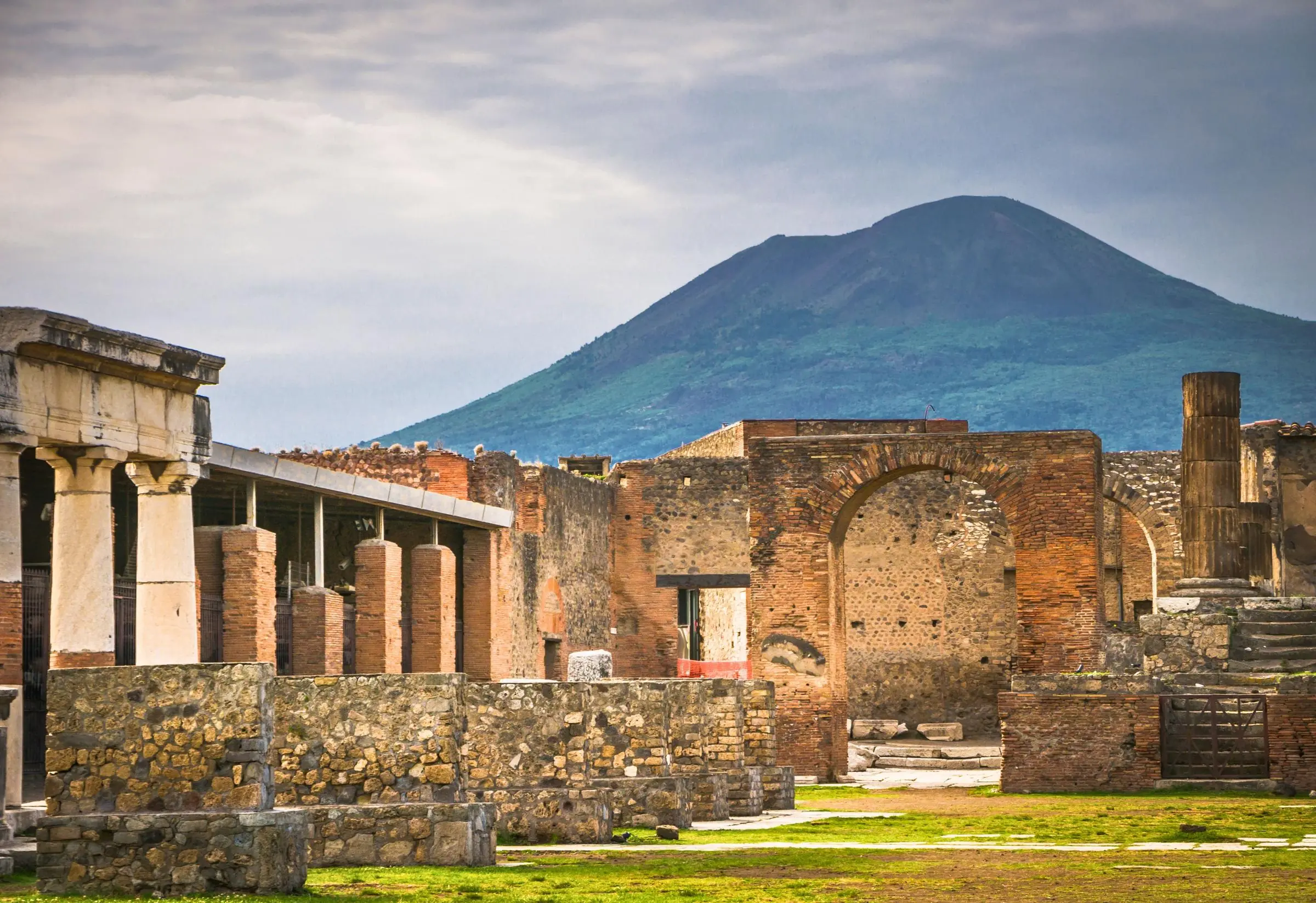
When Mount Vesuvius erupted in 79 AD, it buried the thriving Roman city of Pompeii under meters of pumice and ash. Today, it is one of the most significant archaeological sites in the world. But visiting Pompeii is not a casual stroll. The site spans over 160 acres, the ancient basalt cobblestones are notoriously hard on the feet, and in the summer, the ruins turn into a sun-baked oven.
To get the most out of your visit, you need a solid plan. This guide breaks down exactly how to get there, which entry tickets make sense for your schedule, and how to navigate the massive site to see the most important highlights without burning out.
How to Tackle Pompeii Based on Your Travel Style
Pompeii is overwhelming. How you approach it should depend entirely on your constraints.
- For the Time-Poor: If you only have a half-day, do not try to navigate the site yourself. You will spend half your time looking at a map trying to figure out which unlabelled stone wall you are looking at. Book a Guided Tour with an Archaeologist. They know exactly how to bypass the crowds and will bring the ruins to life in two hours. Alternatively, elevate your visit by booking a Pompeii fast track ticket, guided tour, and wine tasting.
- For Families with Kids: The cobblestones here are brutal on small stroller wheels. Bring a carrier or a rugged stroller. Focus your energy on the Amphitheater area (near the Piazza Anfiteatro entrance)—it has more open space for kids to walk, and the nearby palaestra (gymnasium) is visually impressive.
- For the Budget Traveler: Skip the guided tours and take the Circumvesuviana train from Naples (€3.30 each way). Buy a standard Skip-the-Line Entry Ticket with Audio Guide and pack your own lunch. Food inside the park is limited to one crowded cafeteria.
Logistics: Getting There via the Circumvesuviana
The vast majority of visitors arrive at Pompeii via the Circumvesuviana, a gritty, commuter train network that connects Naples to Sorrento.
Step-by-Step: Naples to Pompeii
⏱️ Total: 50 minNavigate to Napoli Garibaldi
Head to the lower level of Napoli Centrale station. Follow the signs for the Circumvesuviana. You can buy tickets at the window or tap your contactless credit card at the turnstiles.
Board the Sorrento-Bound Train
Make sure the train’s final destination is Sorrento. Do not get on a train heading to Sarno or Poggiomarino. The train is often hot, crowded, and lacks air conditioning. Stand near the doors if you can’t get a seat.
Exit at Pompei Scavi-Villa dei Misteri
This is the stop you want. Do not get off at the “Pompei” stop on the Trenitalia line unless you want a 20-minute walk through the modern town. From the Pompei Scavi station, the main entrance (Porta Marina) is a 2-minute walk to your right.
Watch Your Pockets: The Circumvesuviana is notorious for pickpockets, especially during the crowded summer months. Keep your bags zipped, in front of you, and your phone out of your back pocket. For more transit tips, see our Circumvesuviana Train Guide.
If you prefer a more comfortable ride, look into the Campania Express, a tourist-focused train that runs on the same tracks but features air conditioning, guaranteed seating, and fewer stops. It costs more and runs less frequently, but it is much more pleasant. You can check schedules on the official EAV website.
If you want to avoid the commuter lines entirely, take the standard Trenitalia regional train from Napoli Centrale. Get off at the Pompei station (not Pompei Scavi). The trains are modern and air-conditioned, but the station is a 10-minute walk to the Piazza Anfiteatro entrance—which means you start at the opposite end of the park from the Forum.
Tickets & Entry Gates
Pompeii has three main entrances:
- Porta Marina: The main entrance, located right next to the Pompei Scavi train station. It has the longest lines but the best facilities (audio guides, main bookshop).
- Piazza Esedra: Located just south of Porta Marina. Usually less crowded.
- Piazza Anfiteatro: Located on the eastern side of the park, near the modern town of Pompeii and the Pompei Santuario train station. Great if you want to start at the Amphitheater and work your way backward toward the Forum.
Pompeii Reserved Entry
- Guaranteed entry time
- Skip the main ticket purchasing line
- Explore at your own pace
- Does not include a live guide
Tour with Archaeologist
- 2-hour walking tour with an expert
- Skip-the-line entry included
- Headsets provided to hear the guide clearly
- Ideal for understanding the context of the ruins
If you plan to visit Herculaneum and the National Archaeological Museum during your trip, consider purchasing the Campania Artecard. It covers public transport and provides free or discounted entry to major sites.
Deep Dive: The 5 Pompeii Highlights
Pompeii is too large to see in a single day. If you try to see every street, you will suffer from “ruin fatigue.” Instead, focus your energy on these five distinct highlights that tell the story of the city.
1. The Forum (Il Foro)
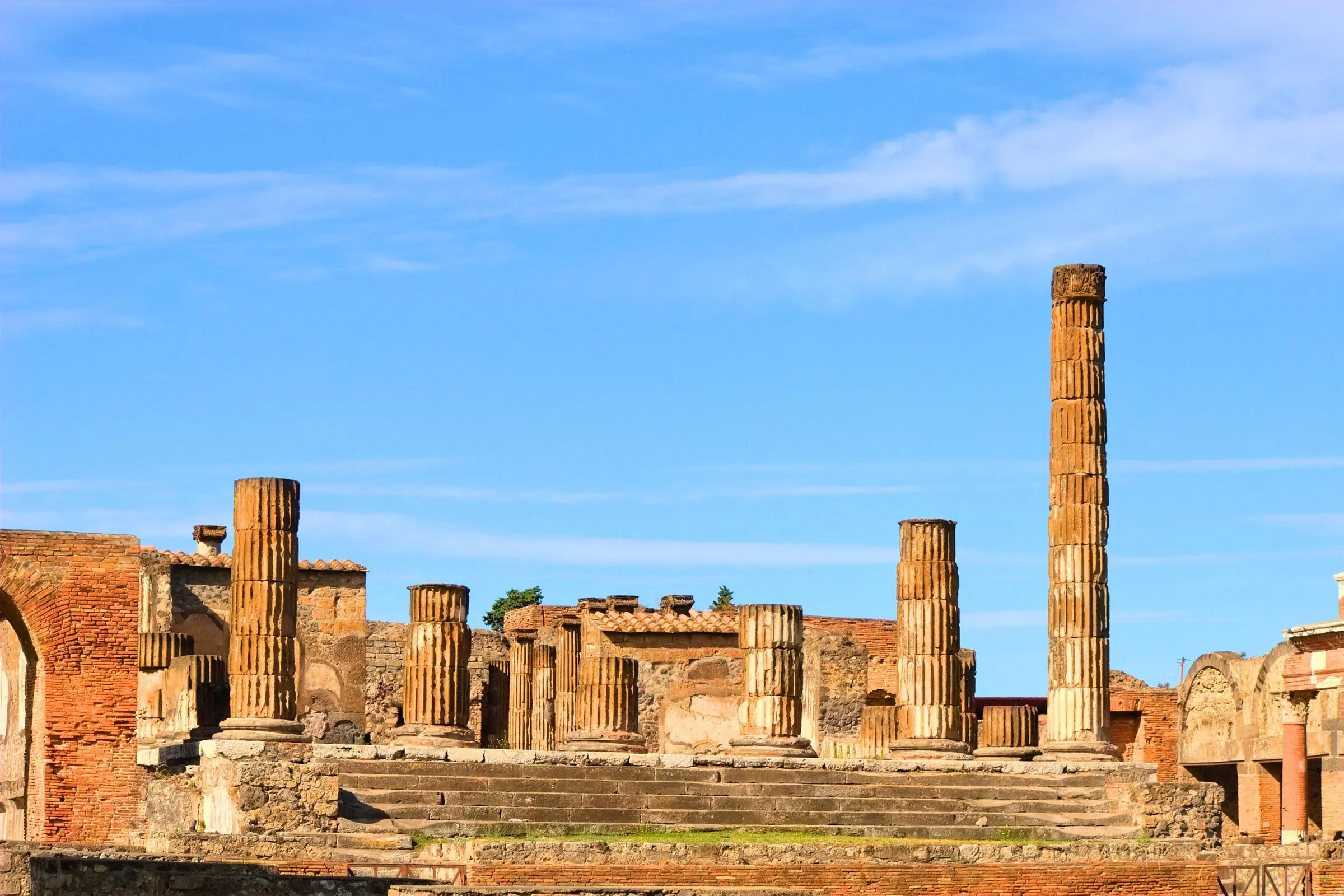
If you enter through Porta Marina, the Forum is one of the first major areas you will encounter. This was the commercial, religious, and political heart of Pompeii. Stand in the center of the massive rectangular plaza and look north—you will see the Temple of Jupiter framed perfectly against the ominous peak of Mount Vesuvius. Local Tip: The Forum gets incredibly crowded by 11:00 AM. If you arrive early, head here first to get photos without hundreds of tour groups in the background.
2. The Plaster Casts of the Victims
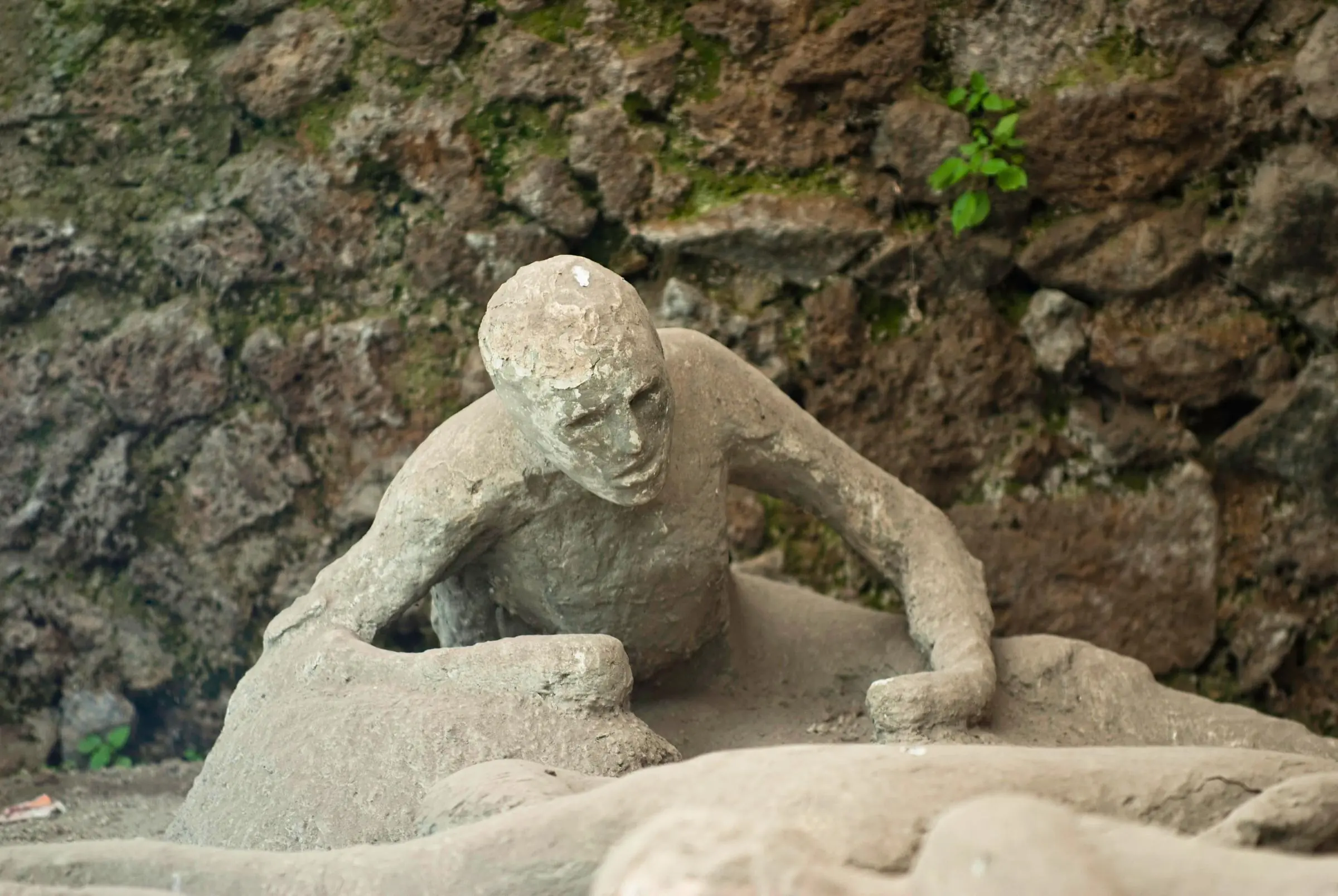
The most sobering aspect of Pompeii is the human element. During the 19th-century excavations, archaeologist Giuseppe Fiorelli realized that the voids left in the compacted ash were the exact shapes of the victims’ bodies. By pouring plaster into these voids, he created the haunting casts we see today. You can view several of these casts in the Granai del Foro (the granaries on the west side of the Forum) and in the Macellum (the ancient meat and fish market).
3. The Lupanar (The Brothel)
Pompeii was a bustling port town, and the Lupanar is its most famous brothel. It is a small, two-story building featuring stone beds (which would have been covered with mattresses) and explicit erotic frescoes above the doors, which likely served as a “menu” of services for foreign sailors who didn’t speak Latin. Local Tip: Because the building is small, a queue forms outside almost every day. Visit this either right when the park opens or late in the afternoon to avoid standing in the sun for 20 minutes just to walk through a narrow hallway.
4. The Amphitheater
Located at the far eastern edge of the site, this is the oldest surviving Roman amphitheater in the world, built around 70 BC (predating the Colosseum in Rome by over a century). It held up to 20,000 spectators for gladiator games. Music fans will also recognize it as the venue where Pink Floyd recorded their famous 1971 concert film, Live at Pompeii.
5. The Villa of the Mysteries (Villa dei Misteri)
Do not skip this, even though it requires a bit of a walk. Located outside the main city walls (exit via Porta Ercolano and walk down the ancient road lined with tombs), this massive suburban villa contains some of the best-preserved frescoes in the ancient world. The “Room of the Mysteries” features a brilliant, wrap-around mural depicting the initiation rites of a young woman into the Greco-Roman mystery cult of Dionysus. The vivid “Pompeian Red” colors are spectacular.
Keep Planning: If you want to see the actual artifacts, mosaics, and statues pulled from Pompeii, you must visit Naples. Read our guide to the National Archaeological Museum (MANN).
Survival Tips: Sun, Water, and Crowds
Visiting Pompeii is a physical endurance test. Keep these realities in mind:
- Sun Protection is Mandatory: There is almost zero shade in Pompeii. The roofs collapsed during the eruption, leaving the streets exposed. Bring a wide-brimmed hat, sunglasses, and high-SPF sunscreen. If you visit in July or August, an umbrella for portable shade is a smart idea.
- Hydration: You will sweat. A lot. Bring a refillable water bottle. There are several ancient public fountains (look for the stone basins with metal spouts) scattered throughout the site that dispense cold, safe, drinkable water.
- Footwear: The Roman roads are made of large, uneven basalt blocks with deep ruts carved by ancient chariot wheels. Do not wear sandals, flip-flops, or heels. Wear your most comfortable, thick-soled walking shoes.
- Luggage: Large backpacks and suitcases are strictly prohibited inside the site. There is a free cloakroom at the Porta Marina entrance where you can leave your bags. If it is full, head downstairs into the Pompei Scavi train station, which operates a secure, paid luggage storage office.
Where to Stay
Most travelers visit Pompeii as a day trip from Naples or Sorrento.
- Naples offers the easiest transit access (the Circumvesuviana starts here) and is home to the museum where all of Pompeii’s best artifacts are kept.
- Sorrento is a more relaxed, resort-style base, though the train ride to Pompeii takes about 30-40 minutes.
If you want to be first in line at the gates, you can stay in the modern town of Pompei.
Frequently Asked Questions
How long does it take to visit Pompeii?
You need a minimum of 3 to 4 hours to see the main highlights without running. If you are a history enthusiast, you could easily spend 6 to 8 hours exploring the outer villas and quieter streets.
Can I visit Pompeii and Mount Vesuvius in the same day?
Yes, it is a very common itinerary. You can take a bus from the Pompei Scavi train station up to the volcano. However, it makes for a long, exhausting day. If you want to do both, consider booking a combined Pompeii and Vesuvius Guided Day Trip to handle the logistics for you.
Is Pompeii wheelchair accessible?
Partially. The site has developed a specific route called “Pompeii for All” (Pompei per Tutti) which uses ramps and smoothed pathways to allow wheelchair and mobility-scooter access to certain main areas, including the Forum. However, much of the site remains inaccessible due to the ancient, uneven roads.
Are there bathrooms inside the ruins?
Yes, but they are sparse. There are facilities near the main entrances (Porta Marina, Piazza Anfiteatro) and a few scattered inside, such as near the cafeteria behind the Forum. Always use the restroom at the entrance before you begin your walk.
Can I bring food into Pompeii?
Yes, you can bring your own food and water. There are designated picnic areas inside the site. Eating while walking through the ruins or sitting on ancient walls is strictly prohibited to protect the archaeology.
Ready to step back in time?
Pompeii is one of Italy’s most visited sites. Don’t waste your morning standing in the ticket line at Porta Marina. Book your reserved entry tickets in advance and walk straight to the gates.